

Rethinking What Printed Electronics Can Be Made Of
At PDoT.tech, we’ve spent considerable time asking a deceptively simple question: what if the inks powering the next generation of flexible electronics didn’t rely on metals, toxic solvents, or complex processing?
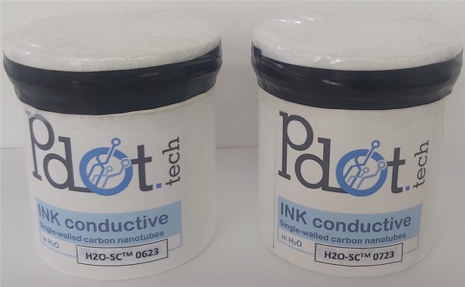
The answer is taking shape in our lab — and we’re excited to share it.
We’ve developed a platform of p- and n-type highly conductive, water-based carbon pastes using bio-based dispersants, purpose-built for screen printing. The result? Patterned films with outstanding adhesion, consistent electronic performance, and real compatibility with the substrates that matter most — paper, plastics, and textiles.
What sets these formulations apart:
- High solid loading with stable rheology — engineered to perform reliably on industrial screen-printing equipment
- Low sheet resistance after simple, low-temperature drying — no energy-intensive curing, no exotic equipment
- Roll-to-roll readiness — designed from the ground up for scalable, continuous manufacturing
This isn’t just a materials story. It’s a pathway toward metal-free, cost-effective, and genuinely sustainable flexible electronics — from electrodes and distributed sensors to energy harvesters and electrothermal heaters.
We believe the industry is ready for inks that perform at a high level without the environmental and supply-chain baggage of conventional approaches. This platform is our contribution to making that shift practical.
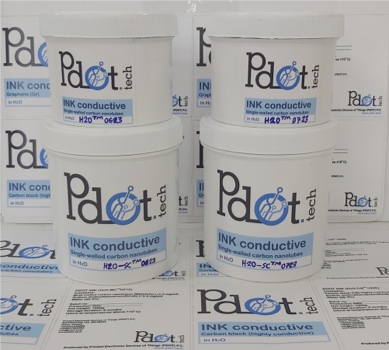
We’re actively looking for partners interested in process optimization, device integration, and pilot-scale validation. If that’s your space, we’d love to talk.
📄 Full research article: https://doi.org/10.1021/acsaelm.5c02274
This work was supported by the APPROACH EU Project, whose commitment to advancing novel energy harvesting solutions made this research possible.

Leave a Reply